
Pilot Training Path: PPL, CPL, Frozen ATPL, ATPL
Capt. Qaddar Sarfraz · 6 February 2025

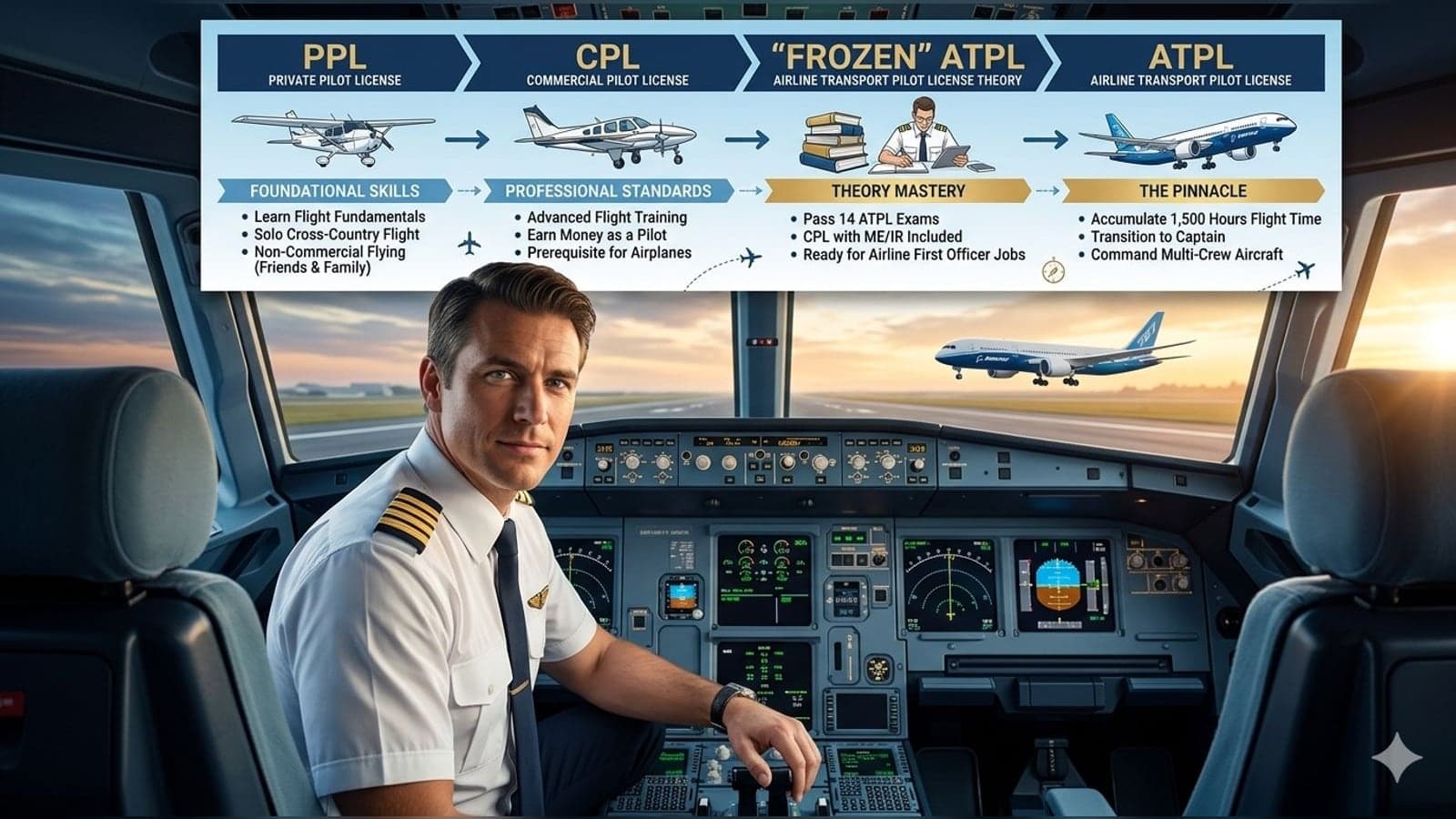
Many student pilots ask whether they can go directly for ATPL instead of following PPL → CPL → ATPL. While it may sound faster, aviation training is designed in steps for a reason: each license builds the skills, knowledge, and responsibility required to become a safe and competent airline pilot.
What is PPL (Private Pilot License)?
PPL is the first step. It introduces basic flying skills, aircraft handling, navigation and communication, and an aviation safety mindset. At this stage, students learn how to fly—not how to fly commercially.
CPL (Commercial Pilot License)
CPL allows pilots to fly professionally, with emphasis on advanced handling, decision-making under pressure, commercial operations knowledge, and strong situational awareness. CPL transforms a student pilot into a professional pilot.
What is a Frozen ATPL?
A Frozen ATPL means a pilot has passed ATPL theory exams and typically holds a CPL with multi-engine and instrument rating, but does not yet meet flight-hour requirements for a full ATPL. The license remains “frozen” until those requirements are met.
What is a full ATPL?
A full ATPL is the highest pilot license, allowing command on airline aircraft. It requires extensive flight hours, operational experience, and strict regulatory standards—none of which can be skipped responsibly.
Why skipping steps hurts outcomes
- ATPL exams without flying experience weaken practical judgment.
- PPL and CPL build confidence, safety awareness, and decision-making habits airlines still evaluate.
- Structured progression is the globally accepted, insurer- and regulator-aligned path.
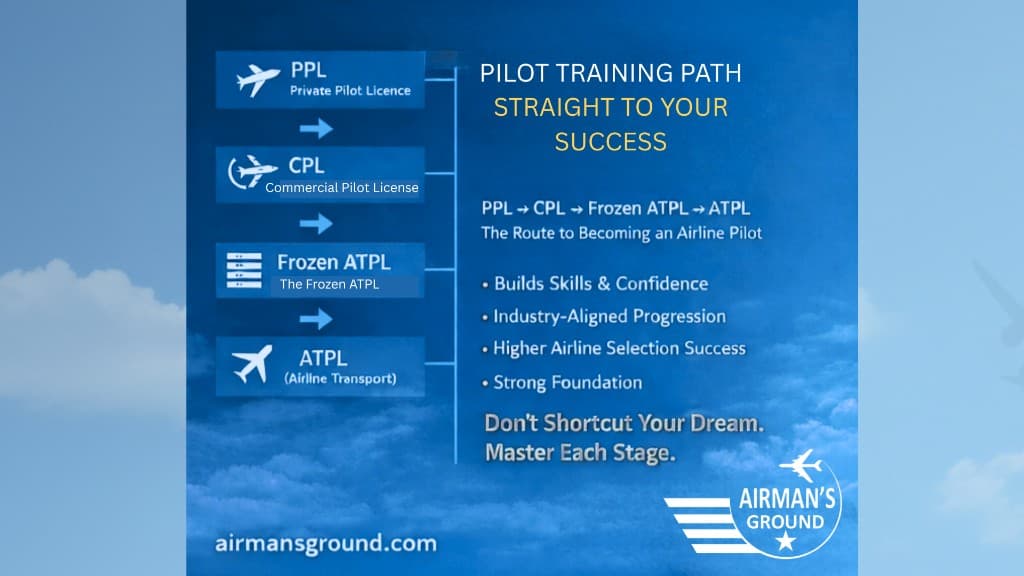
The proven path: PPL → CPL → Frozen ATPL → ATPL
This progression balances theory and flying, reduces exam pressure spikes, aligns with industry expectations, and supports stronger performance in type rating, simulator assessments, and line training.
Frequently asked questions (short answers)
- Can you start ATPL theory without flying? Yes—but combining stages improves understanding.
- Is Frozen ATPL enough for many airline pathways? Often yes; always confirm with your target regulator and employer.
- Does Frozen ATPL “expire”? The frozen status itself does not expire like milk—but ratings and medicals must stay valid.