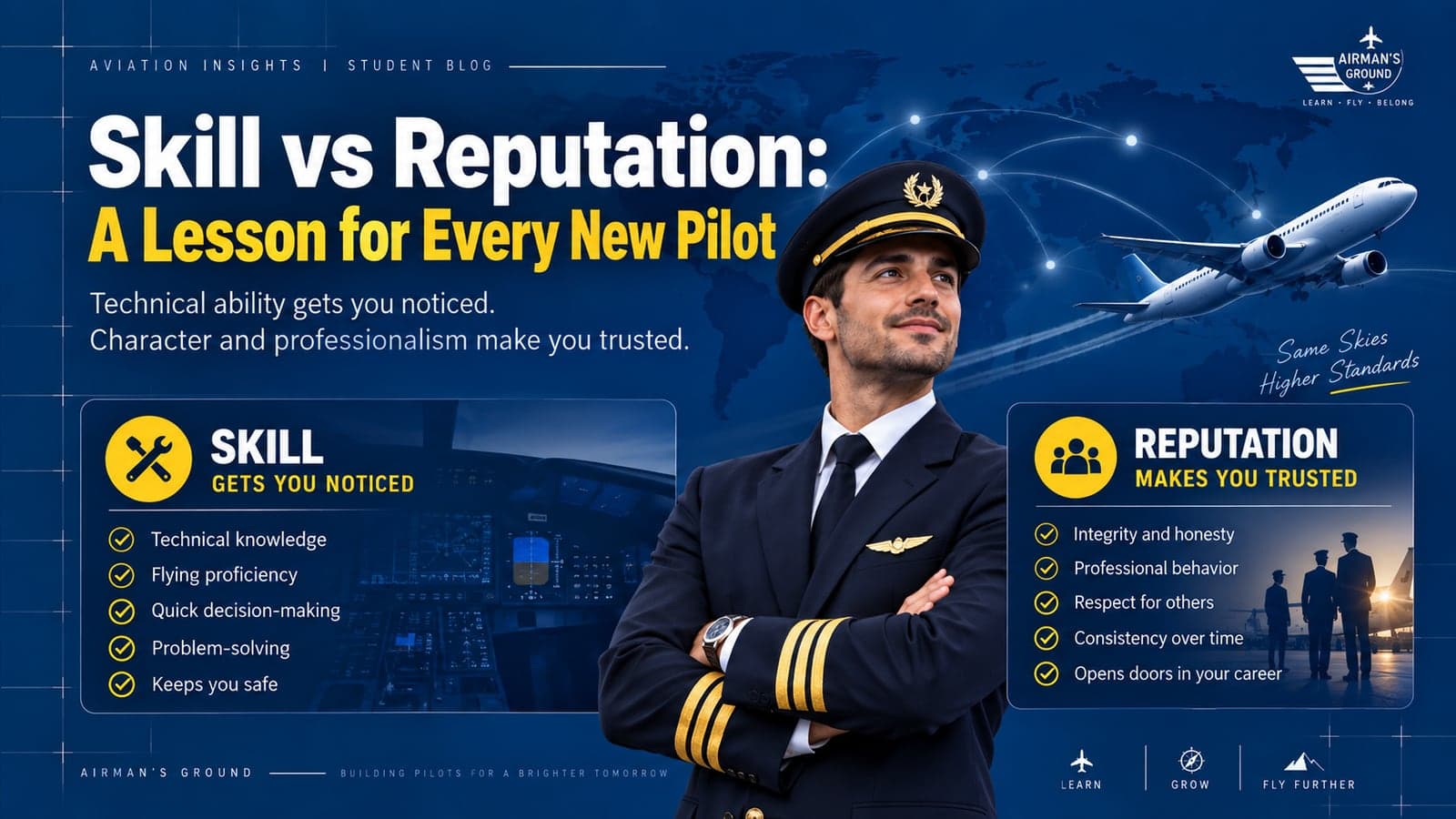
Skill vs Reputation: A Lesson for Every New Pilot
A Lesson I Want to Teach All Newcomers (After My Years of Observation and Experience)
Capt. Qaddar Sarfraz · 24 February 2024

In your pilot career, you may wonder whether skills matter more than reputation. When you enter flight school—or any professional career—you often believe success depends purely on technical skill. It does not. Skill gets you licensed; reputation builds your career.
In aviation, long-term success is built on emotional intelligence, personal growth, and professional conduct from the very first day. Your knowledge may earn you certificates, but your character determines how far you go. This article shares principles every aspiring pilot should understand early.
1. Everyone is watching—even when they say nothing
In flight school, evaluation is not limited to exams. Instructors observe your attitude, batchmates form opinions about your character, and future references are built silently. Early reputation is shaped by punctuality, respectful communication, preparedness, and emotional control under pressure.
Treat every day as part of your professional interview. Aviation is a small industry, and impressions travel quickly.
2. Control your emotions before you become a pilot
Aviation is emotional pressure disguised as technical work. You will face exam failures, instructor criticism, peer comparison, financial stress, and delays in flying hours. Your reaction defines you more than the situation itself.
- Respond instead of reacting.
- Listen without ego; accept correction without defensiveness.
- Manage frustration privately.
3. Separate ego from identity
Many young professionals confuse correction with insult. When an instructor corrects you, it is an investment in your growth—not an attack. Confidence is silent; ego is loud. The fastest learners are often the least defensive.
4. Dignified communication builds trust
Avoid gossip, public complaints, blaming systems, and emotional outbursts. Instead, speak respectfully in disagreement, ask thoughtful questions, clarify before assuming, and address conflict privately—not publicly.
5. Choose your circle carefully
Stay close to serious learners and disciplined individuals who uplift standards. Distance yourself from chronic complainers, negative influences, and unethical shortcuts. Your environment predicts your professional trajectory.
6. Build internal strength—not only external validation
Real professional growth happens quietly: stay consistent without praise, improve without constant supervision, and reflect honestly on mistakes. Self-respect is stronger than public recognition.
7. Protect your name early
In aviation, your name travels faster than you do. Composure, reliability, accountability, and ethics open opportunities before your CV does. Build a name that opens doors before you knock.
Final message
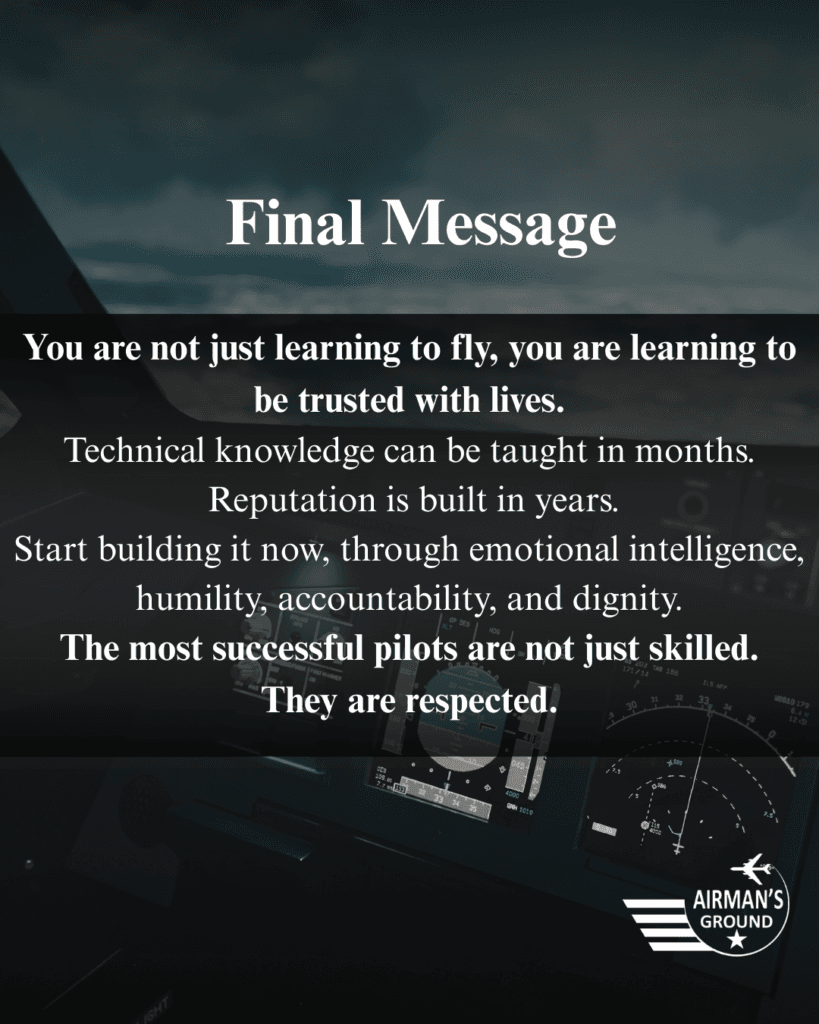
You are not just learning to fly—you are learning to be trusted with lives. Technical knowledge can be taught in months; reputation is built over years. Start building it on day one through emotional intelligence, personal growth, and dignity in every interaction.